
Discova AI
Transforms UX research workflows with AI-driven visual analysis, research synthesis, and usability analytics.
Are you the owner?
Claim this tool to publish updates, news and respond to users.
Sign in to claim ownership
Sign InDescription
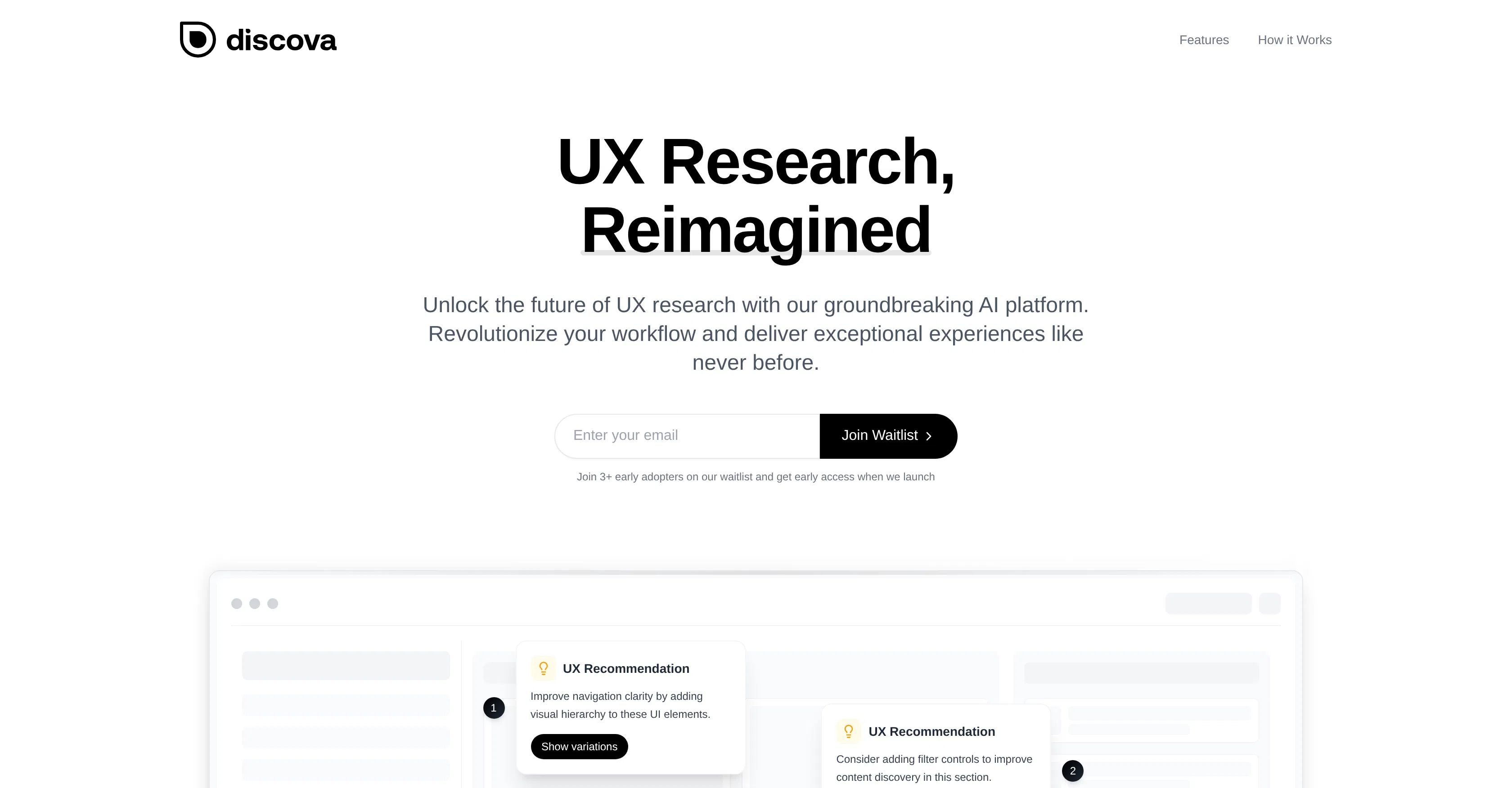
Discova AI is an innovative, AI-powered UX research platform designed to streamline and enhance the process of understanding user behavior and improving digital product experiences. Developed by a team focused on research automation, its core value lies in replacing fragmented, manual analysis with a centralized, intelligent system that accelerates insight generation and supports data-driven design decisions. By automating key research tasks, it empowers teams to focus on strategic creativity rather than administrative overhead.
Key features include advanced visual analysis that interprets user interface screenshots and recordings to identify usability patterns, along with automated research synthesis that clusters qualitative feedback from interviews and surveys into actionable themes. The platform also generates design variations and A/B testing ideas based on user data, provides detailed usability analytics with heatmaps and interaction metrics, and facilitates the creation of dynamic, data-backed user personas. These capabilities work in concert to provide a holistic view of the user journey.
What sets Discova AI apart is its proprietary AI models specifically trained for behavioral and visual UX analysis, enabling it to understand context and intent beyond simple keyword matching. The tool operates as a web-based platform with potential integrations for design tools like Figma and analytics suites, allowing for a seamless workflow from research to implementation. Its technical foundation supports processing of both structured quantitative data and unstructured qualitative inputs, synthesizing them into coherent reports and recommendations.
Ideal for UX researchers, product managers, and design teams in tech companies and digital agencies, Discova AI is particularly valuable for conducting rapid, iterative usability tests on new features, analyzing large volumes of user feedback from beta programs, and building evidence-based design cases for stakeholder reviews. It serves as a force multiplier for small teams lacking extensive research resources and for large organizations aiming to standardize and scale their UX research practices across multiple products.